
Fashion is in my DNA, but I also know nothing is worse than following a trend and feeling like you’re in disguise. In this article, I want to help you interpret what’s in style right now and translate it into your own language without losing yourself in the process.
How to Understand Trends Without Letting Them Control You
Before talking about jeans, dresses, or shoes, I need you to understand one thing clearly: trends are a catalog of ideas, not a mandatory manual. You decide what goes into your wardrobe and what stays on the runway.
Quick Tip: Every time you see a new trend, ask yourself this question: “Would I wear this if nobody else was?” If the answer is no, it’s probably not for you.
To avoid feeling like you’re in disguise, think about three layers of your style:
- Your Base: colors, cuts, and pieces that always look great on you.
- Your Personal Touch: patterns, textures, and volumes that you repeat without realizing.
- The Trends: what you add or try each season to refresh your look.
The most common mistake is putting the trend at the center and your base on the margins. I prefer the opposite: 90% you, 10% trend. It always works.
Key Current Trends and How to Ground Them
I’m going to review some of the trends we’re seeing right now and, more importantly, how to adapt them so they fit into your daily life without looking like a Pinterest costume.
1. Soft Neutrals and Total Cream Looks

Cream tones are on trend, but you can wear them in a thousand ways, from the most romantic look to the most urban version.
Looks in cream, beige, and off-white are everywhere. The risk: you might end up looking “too dressed up” or impractical for your real life.
How I adapt it without feeling disguised:
- If you’re into jeans: keep your usual denim and just switch the top for a blouse or t-shirt in cream.
- If you love dresses: look for a cream dress with a silhouette you already wear (shirt-style, wrap, t-shirt…). The novelty is in the color, not the pattern.
- If you’re worried about stains: combine cream on top and pants in a darker shade below.
The key is to make the color new while keeping the shape of the garment familiar. That way, you’re still you, just more modern.
2. Cape Coats and Enveloping Silhouettes

Cape coats are very trendy, but they don’t have to look like a runway costume.
Blanket, cape, or robe coats provide plenty of versatility and elevate any basic look. The trouble comes when the volume overwhelms you and you feel like you’re in a fashion disguise.
To make it work in real life:
- Balance volume on top with fitted pieces below (skinny jeans, straight jeans, pencil skirt).
- Respect your visual height: if you’re petite, look for capes that don’t go past mid-calf.
- Stick to your usual palette: grey, beige, camel, or black if you’re not comfortable with bold colors.
A trick I often use: I wear the cape coat with a basic t-shirt and my usual jeans. Zero hassle, maximum impact.
3. Capsule Wardrobe for Travel (and Life)

A good travel capsule wardrobe is built around your basics, not pieces that will only live in your suitcase.
The idea of a capsule wardrobe for vacations has gone viral: few pieces that all mix and match, light suitcase… But sometimes you see proposals that seem designed for another life, not for yours.
How to create a capsule wardrobe that doesn’t make you feel disguised:
- Start with your favorite jeans or pants. Don’t swap them for “trendier” options if they don’t convince you.
- Define three base colors that you already wear (for example: white, denim, black, or beige).
- Add only 1–2 trendy pieces: a printed kimono, a special top, eye-catching sandals.
- Take photos of the combinations before the trip. If one doesn’t convince you in the photo, don’t pack it.
The goal is for every look in your capsule to represent you. You’re not trying out a new personality, just traveling with less weight.
4. Baggy Pants and Relaxed Silhouettes

If you jump from skinny to baggy all at once, it’s easy to feel disguised. Transition gradually.
After years of skinny jeans, loose and flowing trousers have taken over. They are comfortable and stylish, but if your eye isn’t used to it, you might feel “too wide.”
I suggest a smooth transition:
- Start with a relaxed straight-cut before jumping to the extreme baggy.
- Always combine with something fitted on top (fitted top, tucked-in t-shirt, tailored blazer).
- Define the ankle: cuffing, fitted booties, or sneakers that mark the end of the pants.
In my experience, when you see your reflection with a new volume for three days in a row, you stop feeling weird and it starts to feel like “your new normal”.
5. Boho Touches and Festival Looks

The boho style works best when mixed with very personal pieces, not when you dress like a festival catalog.
The boho style returns every spring: off-shoulder tops, flowing skirts, crochet, hats… The danger lies in turning into a caricature if you wear everything together.
To keep the best without disguising yourself:
- Choose only one strong boho element: a kimono, a skirt, a special top.
- Surround that piece with your personal basics: jeans, plain t-shirts, white sneakers.
- If you don’t see yourself in large flowers, try textures (lace, crochet, linen) in neutral tones.
The boho trend integrates very well into a minimalist wardrobe if you maintain your palette and just play with shapes.
6. Shine and “Editorial” Looks for Real Life

Editorial looks can inspire you, but you don’t have to copy them exactly for your daily life.
With social media and fashion editorials, glitter and red carpet looks are more present than ever in our feed. That doesn’t mean you have to hit the streets like you’re going to a gala.
How to wear sparkle without feeling over the top:
- Swap the full sequined dress for a shiny top with your favorite jeans.
- Change the black tie jumpsuit for a satin shirt in a color you already wear.
- If you’re hesitant, start with shiny accessories (bag, belt, shoes).
A recommendation I often give to my readers that aligns with what many experienced editorial stylists indicate: let the most extreme looks serve as visual inspiration and stick with 1–2 ideas that fit your routine (a color, a fabric, a type of neckline).
How to Adapt a Trend to Your Style Step by Step
Now, I want to get more specific. When you see something you like on Instagram or in a store, how do you decide if it fits your style? I’ll share a small method I use myself.
Step 1: Identify What Exactly the Trend Is
It’s not the same to like “the whole look” as it is to like a specific part. Ask yourself:
- Are you drawn to the color?
- Do you like the cut (oversized, cropped, fitted)?
- Does the fabric appeal to you (satin, chunky knit, linen)?
- Is it the overall style (boho, minimal, sporty)?
The clearer you are about what part you like, the easier it will be to adapt it.
Step 2: Translate It Into Your Language
This is where your personal style comes into play. Do this exercise:
- Think of a piece in your wardrobe that is “similar” in some way.
- Imagine the trend, but with your color palette.
- Visualize the same idea, but with the length and neckline you already use.
If it starts to come together in your head, you’re on the right track.
Step 3: Try It First in a Low-Risk Version
You don’t need to dive straight into a total look. Start with a “trial” version: a t-shirt, an accessory, a detail.
Examples of low-risk versions:
- Feeling drawn to metallics → try a bag or some flats.
- Are you into bright pink → start with a sweater, not a full outfit.
- Interested in animal print → begin with a belt or a scarf.
Step 4: Pay Attention to How You Feel, Not Just How You Look
The mirror is important, but your feeling is even more so. When you look at yourself in something new, pay attention to these:
- Do you walk naturally or are you aware of the garment all the time?
- Do you recognize yourself in your reflection or do you only see “a trend executed well”?
- Can you imagine wearing that look again without a special event?
If you have to justify too much about the piece, it’s probably not for you (at least not at this stage of your style).
Your Base Wardrobe: The Best Antidote Against Disguise Effect
When your base is well built, it’s much harder for a trend to overwhelm you. That’s why I always insist on having a small “skeleton” of a wardrobe that is very much yours.
How to Identify Your Real Basics (Not Theoretical Ones)
Forget for a moment what you “should” have. Look at your real life:
- Think about the pieces you repeat without realizing every week.
- Note the colors that appear most often in your laundry.
- Check photos from the last few months: what silhouettes are repeated?
Those are your true basics. With them, you will build the frame within which trends fit much better.
A Small Guide to Proportions that Almost Never Fails
Here’s a simple rule I consistently apply:
- If there’s volume on top, keep it cleaner below.
- If the garment is very short, balance it with something more covered.
- If the color shouts, let the rest whisper.
With this base, you can afford a statement bag, baggy pants, or a trendy top without the ensemble turning into a disguise.
Accessories: The Perfect Playground to Experiment with Trends
If there’s a safe space to play with what’s in style, it’s accessories. They don’t commit you as much as a large piece and have tremendous power to refresh a look.
1. Statement Sunglasses

Sunglasses are an easy way to try trendy shapes and colors without touching your whole wardrobe.
Daring shapes, colored lenses, thick frames… Sunglasses can change your face and energy in seconds.
If you don’t want to feel disguised:
- Keep a classic frame that’s your “go-to” (aviator, black plastic, tortoiseshell).
- Add only one bolder pair for specific moments.
- Respect the proportions of your face: if you have soft features, try rounder shapes; if they’re defined, go for slightly angular frames.
2. Kimonos and Light Capes
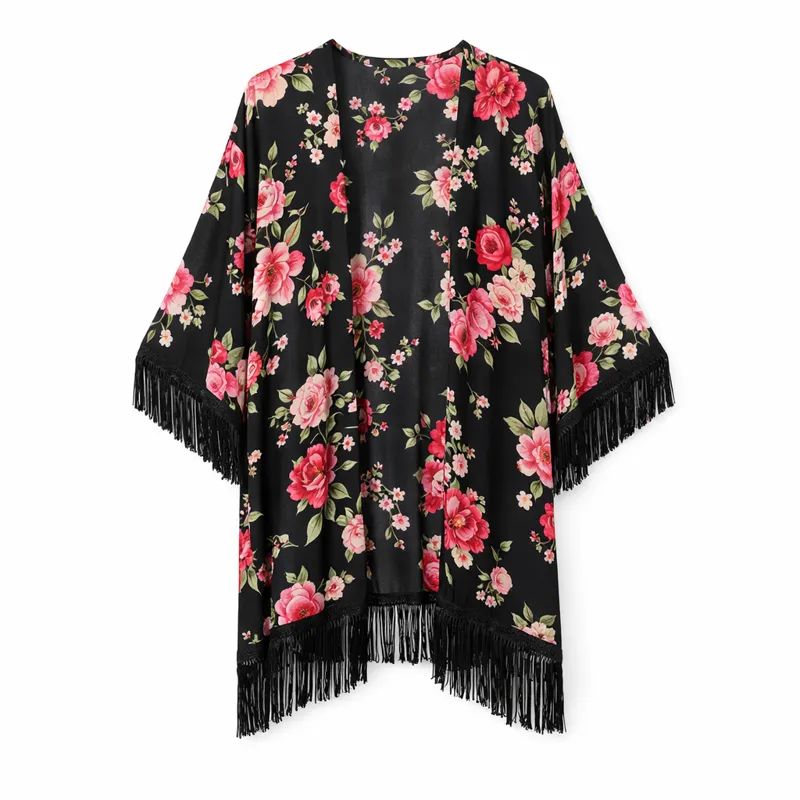
A printed kimono over a very simple look is a perfect way to add trend without losing your essence.
A floral kimono can seem very statement on the hanger, but surprisingly integrates well over a simple look.
Try this:
- Wear it always over plain pieces in colors already present in the print.
- Don’t add more trends to the same look (no cutouts, transparencies, or sparkles).
- If you have doubts about the length, choose one that ends at the height where you usually wear your coats.
Your Relationship with Fashion: Feeling Like Yourself Over Complying with Instagram’s “Dress Code”
In the end, the line between being fashionable and feeling like you’re in disguise has much more to do with you than with the garment itself. Here are a few ideas I find valuable to repeat when a trend tempts me too much:
- A trend you love but hardly ever wear is not a good purchase.
- You don’t need to justify that something “isn’t for you.” Just not feeling like yourself is enough.
- You can admire a look on someone else and decide that you prefer to see it rather than wear it.
- Your style evolves, and so does your way of adapting trends. Allow yourself to evolve.
When you engage with fashion from this perspective, trends become a game rather than an obligation. That’s when they truly stop feeling like a disguise and start reflecting who you are.
Frequently Asked Questions About Trends and Personal Style
How do I know if a trend fits my style?
Do the mirror and agenda test. If with that garment you recognize yourself, walk naturally, and can imagine wearing it in at least three real plans for your week, the trend makes sense for you.
Is it a good idea to change my entire wardrobe each season?
No. The most sustainable thing (for your wallet and for the planet) is to build a very personal foundation and only update a small percentage with trends. Changing everything at once increases the disguise effect and usually ends in regret.
What should I do if I like a trend but feel embarrassed to wear it?
Try it first in “safe” spaces: at home, with friends, or in an informal setting. Start with the softest version (neutral color, less volume, or accessory format) and increase if you feel comfortable.
How do I adapt trends if I have a strict dress code at work?
Incorporate the trend in details that don’t break the dress code: accessories, small pops of color, different textures, or discreet cuts. Your base can remain formal, but with updated nods.
Can you have your own style without following any trends?
Yes. Your personal style emerges from your tastes, your body, and your real life, not from the fashion calendar. Trends are optional. You can use them when they add value or ignore them when they don’t benefit you.