
If you love following trends but every time you see a viral look you think “nice, but I would look dressed up like this”, this article is for you. Fashion is in my DNA, but so is the idea that your style should reflect you, not what the algorithm dictates.
Here, I want to help you calmly read the current trends, choose only what fits you, and integrate it into your real wardrobe, your daily life, and your body, without losing personality in the attempt.
1. Before the trends: define your style base
Before rushing for the viral piece of the season, you need to define your “neutral base”: those pieces that always save you and make you feel 100% yourself. This base will be the filter that helps you adapt trends without looking dressed up.
Think of a simple, versatile capsule wardrobe, where each trend enters as a guest, not as the absolute star.

1.1. Quick basic wardrobe check
- Colors that you wear without thinking: these are usually your true neutrals.
- Pieces you wear without looking in the mirror a thousand times: your good comfort zone.
- Cuts that always flatter you: pant rise, skirt length, neck type.
- Shoes you can walk in for hours: if a trend can’t handle this level, be cautious.
Once you have this base clear, any current trend (metallics, volume, refreshed boho, oversized tailoring…) can be translated into your language without losing your way.
2. Key current trends (and how to ground them)
The runways, Instagram, and TikTok push many microtrends, but on the streets, some big lines are consolidating. I summarize the strongest ones and how to adapt them without feeling like you’re in costume.
volume
boho chic
relaxed tailoring
baggy pants
total cream looks
2.1. Metallics and shines: from editorial to everyday

Metallic looks have gone from nighttime to daytime: silver dresses, jewel bags, mirror shoes… They look amazing in editorials, but transferred as is to your everyday life can seem like a continuous party costume.
The key is to use shine as an accent, not as a full uniform.
- Start with accessories: a silver bag or metallic ballet flats work great with jeans and a white t-shirt.
- Combine with matte neutrals: gray, beige, off-white or black tone down the drama of the shine.
- Care with makeup: if you wear a very striking piece, keep your skin clean and lips in soft tones.
2.2. Volumes, puffed sleeves and romantic dresses

Puffed sleeves, flowy dresses, and romantic tops have been strong for several seasons. The risk is unintentionally crossing into “princess” territory.
To maintain your current style and not feel dressed up, always balance the volume with more structured pieces:
- If you wear puffed sleeves, choose straight pants or simple jeans below.
- If your dress has lots of flow, pair it with minimal sandals or simple boots.
- If the color is already very sweet (cream, dusty pink), add a more “serious” bag in black or leather.
The trick is to mix the romantic element with something more urban, so the outfit does not look like a costume from another era.
2.3. Festival boho, but in a wearable version
The festival boho style keeps returning every spring: off-shoulder tops, flowing skirts, crochet, hats… I love it for concerts and summer getaways, but for day-to-day it sometimes feels excessive.
The idea is to keep the relaxed vibe, not the full festival costume.
- Reduce layers: instead of kimono + top + necklaces, stick with a single standout boho element.
- Neutralize with denim: denim shorts or straight jeans make any boho piece look more contemporary.
- Think textures: linen, cotton, and fine crochet work better than very rigid fabrics.

2.4. Relaxed tailoring, layers and cape coats

Oversized tailoring and cape-style coats are among the most elegant trends of recent years. The line between “chic street style” and “it looks like I’m wearing the sofa blanket” is very thin.
To get it right, pay attention to three things:
- Proportion balance: if the coat is baggy, define your silhouette underneath (straight pants, fitted top or belt).
- Coherent color palette: cream tones, soft grays, and white work wonderfully.
- Defined footwear: structured ankle boots or loafers provide a polished finish to the look.
2.5. Baggy pants and relaxed silhouette
Baggy pants and relaxed silhouettes are among the most comfortable trends. But if you’ve been in skinny jeans for years, it’s normal to feel “strange” at first.
The easiest way to integrate them is by elevating the rest of the outfit.
- Pair baggy pants with more polished tops: shirts, high-quality t-shirts, or lightweight blazers.
- Play with the length of the hem: if it gathers too much fabric, get a tailor’s alteration.
- Key footwear: clean, simple sneakers or minimal sandals to avoid adding more volume.

3. How to adapt a trend to your style without feeling dressed up
Here comes the practical part. I want you to have a small mental method every time you see a new trend and ask yourself “is this for me?”.
3.1. Key questions before buying
- Does it fit with at least three pieces from my current wardrobe?
- Would I wear it for more than one season or only while the trend lasts?
- Do I feel like me, just a bit more “current”, or do I recognize myself less?
- Can I tone it down a bit if I get tired (change shoes, bag, layer)?
3.2. Always start with a soft version
Instead of jumping to the most extreme version of the trend, look for the same concept in a simpler item:
- Extreme metallic → silver bag or sandals with a metallic strap.
- Total transparency → blouse with discreet panels or top with only semi-transparent sleeves.
- Neon color → a detail in accessories on a neutral base.
- Large print → the same motif in a smaller size or in a scarf.
3.3. Adjust hairstyle and makeup
Sometimes what makes a look feel like a costume isn’t the clothing, but taking everything to the max: hair, makeup, accessories, and star piece all at once. If you soften the rest, the trend integrates much better.
In hair styling, a simple and polished finish is usually the best ally for trendy looks. Healthy hair with movement makes almost any outfit look more natural.
According to many stylists specialized in fashion editorials, what most betrays a “costume” look is the excess of competing elements at once, not the trend itself.

3.4. Repeat the formula with small variations
When you find a way to wear a trend that you feel good in, repeat the structure and only play with details:
- Keep the same type of pants and change only the trendy top.
- Keep the same base dress and play with different accessories.
- Keep the same color range and change textures or prints.
This way, your style looks coherent even as you update pieces.
4. Examples of trend looks grounded in reality
Here are some very concrete ideas for inspiration. The idea is not for you to copy them exactly but to see how you can take runway styles to your daily life without losing your essence.
4.1. Total cream look without looking like a canvas
Total looks in cream and off-white tones are super trendy. The risk: looking “bland” or not flattering if the tone isn’t yours.
To make it work:
- Combine different volumes (for example, top with some volume + straight skirt).
- Play with textures: cotton, linen, fine knit, something with soft shine.
- Finish with a darker accessory (black or chocolate brown bag).
4.2. Elegant black jumpsuit for events

Black jumpsuits in black tie style are a modern alternative to the classic long dress. They are trendy for guests and special dinners, but some people fear feeling “too dressed up”.
To integrate it into your style:
- Choose a cut that resembles what you already wear (V-neck if you like it, defined waist if you usually wear it).
- Play with minimal accessories: subtle earrings, small bag, simple sandals.
- If it feels too formal, add a relaxed blazer on top.
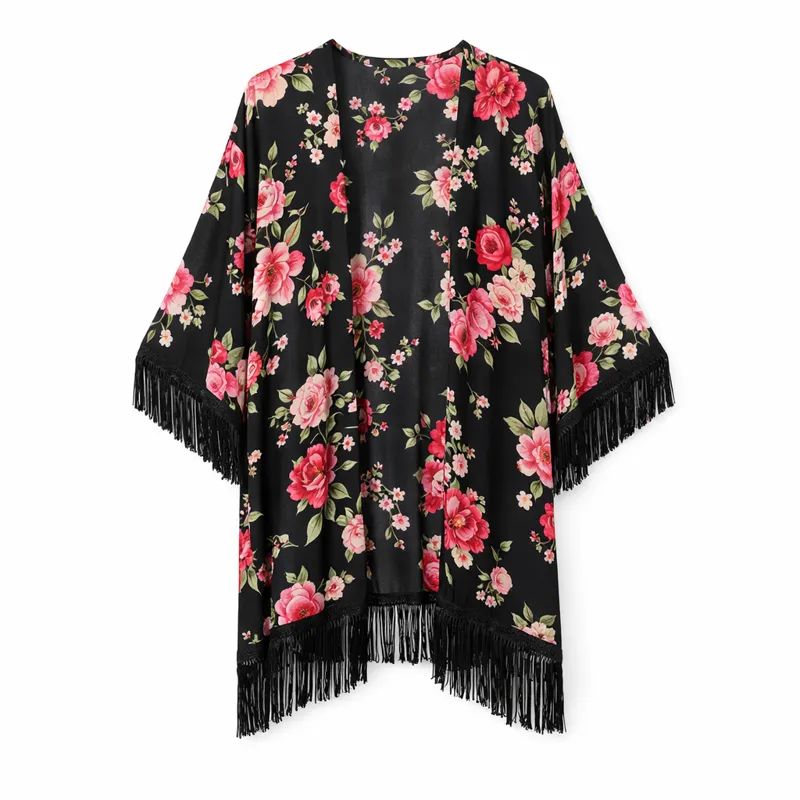
4.3. Floral kimono as a standout piece
Printed kimonos are those pieces that, if poorly combined, scream costume. But if you treat them as a third piece (like a light blazer), they become an incredible ally.
Think of the kimono as the splash of color over a very neutral canvas:
- Simple base: straight jeans + white t-shirt or plain top.
- Footwear in one of the tones of the print for a more harmonious effect.
- Minimal extra accessories: let the kimono speak for itself.
4.4. Sunglasses as a trend accent

When you don’t see yourself daring with very striking clothing, sunglasses are the best trend laboratory: futuristic shapes, colors, clear lenses…
The trick is to respect the harmony with the shape of your face and your overall style, and only play with one element at a time.
5. Color, proportions, and context: the three anti-costume filters
Every time you try a new trend, run it through this triple filter. It saves you a lot of “I don’t see myself” in front of the mirror.
5.1. Color filter
Quick question: does this color flatter me near my face? If the answer is no, move it to the lower body or use it in accessories.
- Difficult colors (neons, very cool pastels) work better in bags, shoes, or details.
- If in doubt, combine any trending shade with off-white, beige, or denim: it usually works.
5.2. Proportions filter
Trends of volume, oversized, and layers need a bit of strategy so that your silhouette doesn’t get lost.
- Simple rule: if there is volume on top, keep it cleaner below; if the bottom is wide, the top should be closer to the body.
- Mark at least one point of the body (waist, wrists, ankles) so that the look doesn’t “swallow” you.
5.3. Context filter
The same look can be perfect for a photo shoot and out of place for the office. Before deciding, think:
- Where will I actually wear it (work, weekend, event, travel)?
- Do I want the look to speak very loudly or to accompany without drawing too much attention?
- Does it adapt to the climate, the type of surface, how much I will walk?
6. Your home and your looks: the background also matters
It’s not just about what you wear, but also about the visual universe you create around: where you take your photos, what colors surround you, how everything looks together.
A corner with light walls, simple paintings, and a cozy atmosphere makes your looks breathe and appear more coherent. It’s the same principle you use when choosing a neutral bag to balance out a striking dress.
If you want your style to appear cared for, think of your space as a frame that complements, not competes with your clothing.

7. How to create your own “trend version” step by step
I propose a mini routine so that every time you fall in love with a trend you can run it through your personal filter.
- Save 3–5 images of that trend that you really like (not just the first one you see).
- Identify the pattern: is it a volume, a color, a texture, a type of garment?
- Translate to your base: think about how this idea would look with your favorite cuts and colors.
- Look first in your wardrobe: often you already have a “light” version of that trend.
- If you buy, make it versatile: that it combines with at least three things you already have.
- Do a reality check: walk, sit, look at yourself in another mirror, take a picture with your phone.
With this routine, trends stop pushing you around, and you start directing them yourself.
FAQs about trends and personal style
How do I know if a trend fits my style or makes me look dressed up?
Ask yourself three questions: do I recognize myself when I look in the mirror?, could I wear this look to a real plan in my daily life?, do I feel comfortable moving? If you need to change too much about how you style your hair, do your makeup, or behave for it to make sense, it probably doesn’t fit your current style.
Is it a good idea to only buy basics and forget about trends?
A wardrobe based on good basics is a great idea, but adding some well-chosen trend pieces keeps your style alive and updated. It’s not about following everything, but choosing two or three nods each season that excite you and fit your real life.
How do I adapt a trend if the trendy color doesn’t suit me?
When the issue is color, move it away from your face or reduce it to accessories: bag, shoes, belt, or even nails. You can also look for the same idea in another tone that suits you better, for example a dusty pink instead of a very intense fuchsia.
What should I do with very trendy pieces from past seasons?
First, check if you still really like them, beyond just the fashion. If the answer is yes, tone down the rest of the look with neutral basics and simple accessories. Many very trendy pieces look current when paired more simply and cleanly than when they came out.
How can I experiment with trends if I have a strict dress code at work?
In environments with a strict dress code, play with small details: fabric texture, shoe shape, bag type, subtle jewelry, or sunglasses for the street. Reserve the bolder versions of each trend for your free time and keep a softer, polished interpretation in the office.