
Updated Fashion Trends
Why Following Trends Doesn’t Mean Dressing Up
Fashion is in my DNA, but that doesn’t mean I wear everything that comes off the runway. Following trends only makes sense when they help you feel more like yourself, not when you recognize yourself more in the fitting room mirror than at home.
When you like a piece on Instagram but feel uncomfortable wearing it on the street, that’s your cue: it’s not your style, it’s a costume. The goal is different: filter what’s in fashion so it can work for your body, your life, and your actual wardrobe.
If you need to explain to everyone “it’s fashionable now,” it’s probably a trend that doesn’t fit you.

In this article, I want to share how I interpret the trends of each season and how you can adapt them to your style without losing yourself, without overbuying, and most importantly, without feeling like you’re in a costume.
How to Read Trends Without Feeling Overwhelmed
Every season brings a thousand inputs: runways, street style, TikTok, newsletters… If you take it all in as it is, you end up feeling that “none of my wardrobe works.” It’s not true. You just need a filter.
1. Ask Yourself Three Questions Before Falling for a Trend
- Does it fit my life? (work, plans, climate, transportation I use…)
- Does it truly flatter my body? (not the model’s, yours)
- Does it pair with at least three items I already have?
If the answer is “no” to two out of three, for me it’s not a trend: it’s a potential costume.
2. Differentiate Between Strong Trends and Micro-Trends
Not everything you see on social media has the same weight. There are significant silhouette or color changes that last for years, and then there are the whims of the mid-season.
- Strong Trends: changes in shape (wider pants, lower rise, defined shoulders), dominant colors (cream tones, intense reds…), fabrics that repeat over several seasons.
- Micro-Trends: very specific details (a type of buckle, a viral bag, a funky sandal) that tend to get old quickly.
According to the experience of stylists with backgrounds in major brands and magazines, a trend only deserves to enter your wardrobe when it surpasses the phase of “runway whim” and starts appearing reinterpreted in various distinct collections. That’s when it gains real weight and becomes more versatile.
What I Do: I tend to invest in strong trends (for example, a good pair of wide pants) and play with micro-trends only in cheap accessories or items I know I’ll wear occasionally.
Key Current Trends (and How to Incorporate Them into Your Style)
I’m not going to make an endless list, but rather focus on what is truly changing the way we dress: more relaxed silhouettes, soft colors, mixing styles, and a greater emphasis on accessories.
Wide Pants and Relaxed Silhouettes

Wide pants have stopped being a “weird trend” to become almost a new basic. The key is balance: volume below, something more defined above.
- If you’re petite, look for styles with high waist and not too much fabric at the bottom.
- If you have curves, fluid fabrics with drape work better than very rigid ones.
- If you want something very versatile, choose a neutral tone: beige, soft gray, or sand.
To avoid looking like “a sack,” always define at least one area: waist, neckline, ankles, or wrists. A point of structure changes everything.
Warm Neutrals and Cream Tones
The total cream look is still very strong because it’s elegant and, when styled well, flatters almost everyone. The idea is not to look like a uniform but to play with textures.
Think of a light dress, a two-piece set like a skirt + top, or a fluid suit for work or an event.

- If you feel washed out with light tones, increase contrast: bolder lip color, golden earrings, or a belt in taupe or chocolate.
- If you’re a big fan of black, use cream in outer garments (light coat, blazer) over your dark base.
- If your style is boho, mix cream with lace, crochet, or rustic fabrics.
Wrap Coats and Comfortable Overcoats

The trend of wrap coats and comfortable overcoats is perfect if you like to look stylish yet relaxed. The trick is that the rest of the look should be simple.
A wrap coat requires clean basics underneath: straight jeans, a plain sweater, classic ankle boots. If you load everything up, that’s when the result looks like a costume from a magazine editorial.
Editorial Touch… but in Small Doses
Runway looks and editorial photos are inspiration, not literal copies. That’s the line between “wow” and “where are you going?”.
Instead of copying the entire look, keep just one idea: a metallic fabric, a long glove, a maxi-belt, or special glasses.

If you really love an editorial trend but find it too “much,” wear it at night, at events, or reduce it to just one statement accessory.
Trends and Style Types: Adapt Without Losing Your Essence
For a trend to work, it has to respect your personality. Here are several translations of the same ideas according to your base style.
If Your Style is Elegant
You seek clean lines, sober colors, and garments you could wear from work to dinner.
- Wide pants in
and neutral tones. - Black jumpsuit as an alternative to a party dress.
- Wrap coat in fine wool + structured bag.

A well-tailored black jumpsuit is a very current way to look polished without needing to follow every trend at once. Change shoes and accessories, and you have several looks in one.
If Your Style is Casual / Urban
You move between jeans, sneakers, and sweatshirts, but want to look up-to-date without losing comfort.
- Wide pants in denim or cargo fabric, paired with plain t-shirts and a blazer.
- Minimalist white or cream jackets that elevate any simple base.
- Glasses with a distinctive shape as a trendy detail.

If Your Style is Boho / Festival
Boho trends return every spring, but now they arrive mixed with more polished touches: tall boots, quality belts, maxi glasses.
The key is to ensure the ensemble doesn’t look like a permanent festival costume, especially if you wear it day-to-day.

- Keep only one truly boho piece (kimono, long skirt, embroidered top).
- Balance it with simple jeans, plain t-shirts, or white shirts.
- Avoid adding everything at once: fringes + maxi print + flower crowns = costume look.
If Your Style is Minimal
You love capsule wardrobes, clean lines, and repeating garments without getting bored.

Trends are allies if you take them to your territory:
- Limit your palette to 3-4 base colors (white, black, sand, gray).
- Introduce only one new silhouette per season (for example, a wider pant).
- Play with pattern details: dropped shoulder, special neckline, different lengths.
On-Trend Accessories: The Shortcut to Updating Your Wardrobe
If you don’t want to change half your clothes but still want to look current, accessories are your best tool. Here, you can afford to be a bit bolder without feeling clad in a costume.
Sunglasses as a Personal Signature
Soft cat-eye shapes, small rectangular frames, or maxi glasses styled in the 70s. Choose a shape that balances your face: if you have very round features, try with soft angles; if your face is very angular, rounder frames will soften.
Structured Bags vs. Relaxed Bags
- Structured: ideal for elegant or office looks, pairs great with wrap coats and jumpsuits.
- Relaxed (hobo, soft shopper): adds a casual touch to more serious ensembles.
Jewelry and Metallic Touches
Warm metals (gold, bronze) work very well with the wave of cream and beige neutrals. If you don’t see yourself in a full metallic dress, add just a couple of eye-catching earrings or a belt with a special buckle.
Create Your Own Anti-Costume Filter
This is where you really adapt fashion to yourself: by building a “system” that helps you decide quickly in fitting rooms and online shopping.
Steps to Define Your Base Style
- Review your favorites. Pull out 5-7 looks where you felt very you. Look for patterns: colors, cuts, types of shoes.
- Detect what’s not being used. Garments you love in theory but always end up at the back of the closet.
- Write down three style words. For example: “clean, feminine, comfortable” or “boho, relaxed, urban.”
- Decide your non-negotiables. Maximum heel height, types of neckline, lengths you don’t like.
When you see a new trend, ask yourself: “Does it respect my non-negotiables and my three words?” If not, let it pass without guilt.
Checklist for the Fitting Room (or in front of the Mirror)
- Do you recognize yourself in the mirror, or do you only see “something from a magazine”?
- Can you move, sit, lift your arms without thinking about your clothes?
- Picture that look on a real day of yours: does it fit or would it only work for a photo?
- Would you still like it if that trend disappeared from social media tomorrow?
Examples of On-Trend Looks That Don’t Look Like Costumes
Here are three ideas you can adapt with what you have in your wardrobe.
1. Urban Look with Wide Pants
- Wide pants in light denim or beige.
- Basic white t-shirt tucked in.
- Minimalist white or cream jacket.
- Clean sneakers or comfortable ankle boots.
- Glasses with personality.
2. Controlled Boho Look for Festivals or Summer
- Main boho piece (floral kimono, flowy dress, or simple white set).
- Simple jeans or shorts if the top already has a lot of details.
- Comfortable sandals, not overly embellished.
- Crossbody bag to keep your hands free.
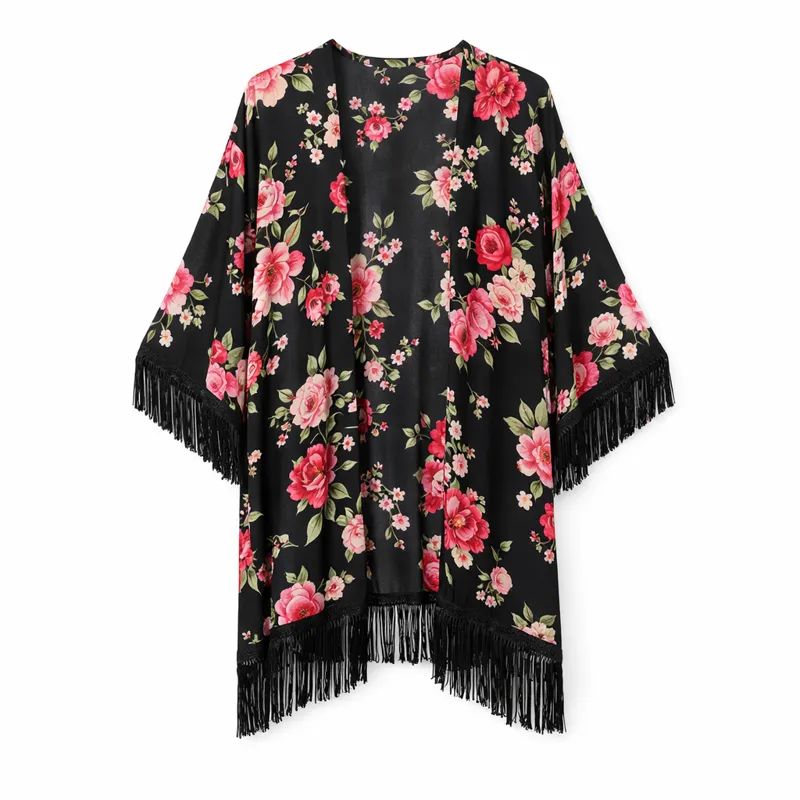
A printed kimono with a neutral base is an easy way to embrace the trend without compromising the entire look. Wear it over a plain top and straight jeans for a balanced mix.
3. Elegant Cream Look for an Event
- Dress or set in a cream tone.
- Nude, soft gold, or very clean black sandals.
- Small structured bag.
- Thin gold jewelry and a lively lipstick.
Take Care of the Whole: Hair, Makeup, and Attitude
An on-trend look can appear costumed if hair and makeup tell a different story. It doesn’t have to be perfect, but it should be coherent.
Think of your beauty style as part of the ensemble: natural, glam, boho… Whatever you choose has to complement rather than clash with the clothing.

- If the look is very striking, keep makeup to something cleaner.
- If the clothing is simple, you can amp up the drama in your eyes or lips a bit.
- A good hairstyle (even if simple) completely changes the “costume” feeling.
In the end, the difference between a costume and your own style often lies more in how you move and feel than in the garment itself.
Mini Plan to Update Your Style Each Season
To wrap up, here’s a small plan you can repeat each new season.
- Review your current wardrobe. Separate what you love, what you’re unsure about, and what you never wear.
- Detect 1-2 strong trends that repeat in magazines and stores and fit with your life.
- Choose a maximum of 3 key purchases. One item for the bottom, one for the top, and one accessory.
- Play with new combinations before buying more: sometimes it was just a matter of changing the order.
- Take photos of your favorite looks to create your own real “lookbook”.
current trends, personal style, how not to look costumed, elegant looks, wardrobe inspiration, real fashion
FAQs About Trends and Personal Style
How do I know if a trend truly flatters me?
Perform the moving mirror test: walk, sit, lift your arms, and look at yourself from different angles. If you still see yourself as beautiful and natural from all sides, that trend likely flatters you.
How many trends should I follow each season?
There’s no perfect number, but as a practical reference, you can focus on a new silhouette, a color, and an accessory. Beyond that, you risk filling your wardrobe with fleeting fashions.
Is it a bad idea to combine several trends in one look?
You can combine them, but with hierarchy. Choose one dominant trend (for example, wide pants) and let the others play a supporting role in small details. If everything competes for attention, the overall look feels overloaded.
What should I do with pieces from trends that are no longer in style?
Before getting rid of them, try mixing them with very current basics: straight jeans, plain t-shirts, simple blazers. Many “past” pieces revive when you change the context.
Can I have my own style if I get a lot of inspiration from social media?
Yes, as long as you don’t copy looks verbatim on a regular basis. Use social media as an idea catalog and stick to what fits your body, your daily life, and your favorite palette.