
Fashion moves quickly, but your style doesn’t have to rush. Today, I want to help you read trends calmly and adapt them to your daily life without feeling like you’re in costume or that you’ve stepped off an unreal runway.
How to Read a Trend Without Losing Your Identity
Before we discuss specific pieces, we need to clarify something: a trend is not a uniform, it’s a catalog of ideas. Your job (and mine, when I guide you) is to filter what fits with you, your body, your schedule, and your budget.
For me, the key lies in three quick questions whenever you see something “it” on social media or in a store:
- Can I see myself wearing this on a normal Tuesday? If you can only picture yourself in it at a festival or in an Instagram photo, be cautious.
- Does it match at least three pieces I already own? If your whole wardrobe has to adapt to that piece, it’s probably a costume.
- Does it enhance something I already like about myself? Your waist, shoulders, neck, energy… A trend should amplify, not cover up who you are.
Fashion is in my DNA, but that doesn’t mean saying yes to everything. It means knowing how to choose which trends will add to your story and which will just make noise.

Current Trends That Actually Work in Real Life
Not all trends are extreme or difficult. There are several that, if chosen wisely, can integrate very naturally into office looks, weekend outfits, or even events.
1. Bright Neutrals and Cream Looks
Cream, vanilla, soft beige, and off-white tones are still strong. What I like about this trend is that it’s very easy to adapt because it starts with basics you may already have: light pants, a lightweight sweater, an oversized shirt.
The key to avoid looking like you’re in beach wedding uniform is to introduce different textures: knit, linen, cotton, something satin… along with a touch of contrast in accessories.
Tip: if you’re afraid of stains or the “hospital effect”, mix cream with camel or a light denim. This adds warmth and makes it much more wearable.

2. Baggy Pants and Relaxed Silhouette

Baggy and flowy pants have ceased to be “just for fashion girls” and have become a super comfortable option for almost everyone. The trick is to balance volumes:
- Baggy on the bottom + fitted on top: fitted t-shirt, body, thin strap top, or tucked-in shirt.
- Structured baggy: if your pants are very loose, balance it with a blazer, a cropped jacket, or a cotton shirt with a good fall.
- Length and Footwear: make sure the hem doesn’t drag. Show a bit of your ankle with clean sneakers, minimalist sandals, or loafers.
3. Kimonos and Lightweight Capes
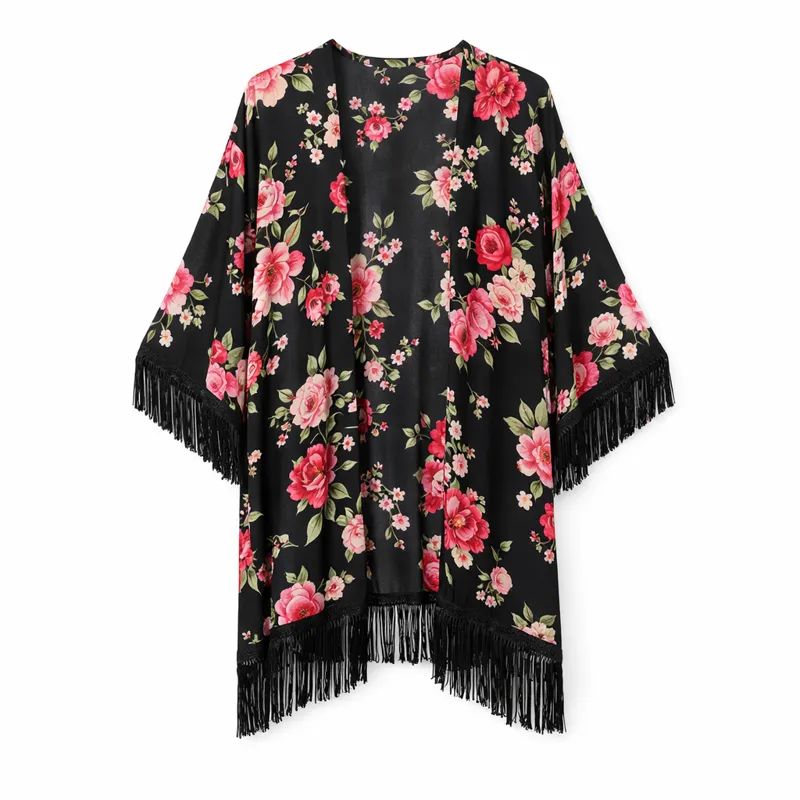
Floral patterned kimonos and blanket-style capes are one of those resources that transform a pair of jeans and a white t-shirt into a look with intention. They’re trendy, yes, but when used correctly they feel more like an extension of your personality than a costume.
Think of them as a beautiful painting hung on a neutral wall: the focus is on the print, so the rest of the outfit has to breathe.
4. Boho Festival… But Grounded

The festival boho style (whites, crochet, fringes, embroidery) is beautiful, but in daily life it can feel too much like a “costume” if worn all at once. My advice is to use only one boho element per look:
- A boho off-shoulder top with straight jeans and simple sandals.
- A flowy long skirt with a basic t-shirt and denim jacket.
- A fringed bag over a plain cotton dress.
This way you keep the free and summery vibe while still recognizing yourself in the mirror.
5. Elegant Black Jumpsuit: Your “Black Tie” Lifesaver
If you want to follow a current guest trend without falling into the eternal dress, the black jumpsuit is a lifesaver. It works in weddings, special dinners, and events where the dress code is a bit more demanding.
To avoid looking like a waitress, play with:
- Neckline (strapless, asymmetrical, soft v-neck).
- Fabric (flowy crepe is better than stiff cotton).
- Personality Accessories: statement earrings, metallic sandals, colorful clutch.

Practical Method: Adapt Any Trend to Your Style
When I see a new trend, I don’t think “I need that,” I think: how do I translate it into my language? To help you do the same, I suggest this small four-step method.
Step 1: Identify the Essence of the Trend
Behind each trend is a simple idea. Don’t get stuck on the literal photo, focus on the concept:
- Baggy: comfort and volume.
- Boho: movement and artisanal details.
- Minimal white: cleanness and pure lines.
- Glam editorial: shine and controlled drama.
Once you understand the essence, it’s much easier to adapt it without copying.
Step 2: Connect with Your Base Uniform
We all have a mental “uniform”: jeans + t-shirt, midi dress, flowy suit… Quickly jot down your three favorite formulas and try to introduce the trend through a single piece:
- If your uniform is jeans + t-shirt, try a floral kimono or a cape jacket.
- If your uniform is midi dress, add very current sunglasses and a geometric bag.
- If your uniform is suit pants + shirt, swap the shirt for a cropped version or one with puff sleeves.
Step 3: Limit the Number of “Protagonists”
Looking like you’re in costume is often a matter of quantity, not the piece itself. If you wear too many statement items at once, the outfit stops telling your story and starts focusing on the trend.
My personal rule is: no more than two very trendy elements per outfit. The rest should be neutral and simple.
Step 4: Try it at Home with Natural Light
Before debuting a trendy look, try it on calmly at home. Do three things:
- Move: if you have to readjust everything all the time, it’s not practical for your real life.
- Sit: observe the neckline, the rise of the pants, the fall of the skirt.
- Take a picture: the camera detects proportion imbalances better.
If when you look at the photo you think “I’m me, but a more polished version,” you’re on the right track.
Trendy Accessories That Elevate a Basic Look
The easiest (and most economical) way to follow trends without feeling like you’re in costume is through accessories. They don’t change the structure of the look, but they do change the mood.
Statement Sunglasses
Sunglasses are that detail that can go unnoticed or become your signature. Colorful frames, gradient lenses, soft cat-eye shapes… are everywhere, but each face and each style need their own proportions.
Tip: always have a classic model (black or tortoiseshell) and a more daring one. By alternating between the two, you’re already playing with the trend without feeling like you’re in costume.

Structured Bags and Mini Bags
Small, structured bags with clean geometric shapes are very trendy. To make them work in your daily life, choose easy-to-combine colors (black, cream, soft nude) and save neon tones for parties or more playful moments.
Jewelry: Subtle Shine
The mix of delicate jewelry with a bolder piece (chunky hoops, rigid collar, bracelet) is perfect for giving a contemporary twist to your basics. If you have a very minimal look, let the jewelry take center stage; if the outfit already has prints or volume, tone down the intensity.
Extra Layer: Coats, Jackets, and That Touch of Sophistication
The outerwear is usually the first thing people see about you on the street. Choosing well here is a very effective way to follow trends without altering much of the rest of your wardrobe.
Blanket Coats and Wrap Coats
Coats-capes and blanket-style models bring a very interesting editorial vibe, but when grounded with basics, they become incredibly wearable. Imagine a beige sweater, white pants, clean sneakers… and on top, a long gray cape.
It’s a look you could wear to the office, a family lunch, or an afternoon of shopping without feeling like you’re in a magazine editorial costume.

Minimalist Jackets in White or Pastel Shades

A well-cut white jacket is one of those investments that instantly makes any look appear more expensive. It works with jeans, a slip dress, or tailored pants… and adapts to trends simply by changing accessories.
Tip: pay attention to the shoulders (not too slouched or too structured) and the length: it shouldn’t cut right at the widest part of your hips to maximize your elongation.
Hair and Makeup: The Frame That Makes Everything Fit
Often, it’s not the clothes that make you feel like you’re in costume, but hair or makeup that you don’t recognize as yours. Beauty trends also need to be filtered.
Well-Cared Hair, Beyond Trendy Hairstyles
I like to think of hair as a living accessory. You can have the most classic cut in the world, but if your hair is healthy and shiny, the look feels current. The opposite also applies: a super trendy cut with unkempt hair diminishes the overall vibe.
Pay special attention to:
- Moisturizing the mid-lengths and ends, especially in summer.
- A simple hairstyle that you can replicate yourself.
- A color that complements your skin tone, rather than dulling it.

Trendy Makeup, Recognizable Skin
In makeup, the same applies as with clothing: if you replicate a runway look exactly, it’s easy to look costumed. My recommendation is to keep your skin very true to how it is (real texture, soft light) and play with only one trendy element at a time:
- Red or cherry lips with a very natural rest.
- Eyes with graphic eyeliner, but nude skin and lips.
- Marked, juicy blush with barely defined eyes.
Final Checklist: Follow Fashion Without Losing Your Style
When in doubt in front of the mirror, refer back to this small checklist. It’s my quick way to validate whether a trendy look is still “me.”
- Real Comfort: Can I walk, sit, climb stairs, and spend a whole day in this outfit without being aware of it?
- Coherence with My Life: Does it fit with what I do today (work, study, care, travel, go out)?
- Balanced Proportions: If something is very voluminous, have I compensated it with something more fitted or structured?
- Maximum Two Trends at Once: clothing, shoes, bag, jewelry, hair, makeup… are there too many competing focus points?
- Recognition: if my face were covered in the photo, would I still feel this look could be mine?
how to avoid looking costumed
personal style
women’s capsule wardrobe
elegant and casual looks
Frequently Asked Questions About Trends and Personal Style
How do I know if a trend fits my style?
Ask yourself three questions: do I see myself wearing it on a normal day?, does it combine with at least three pieces I already own?, does it highlight something I like about myself? If you answer yes to two, it likely fits.
What can I do if I like many trends at once?
Choose only one or two as the protagonists of the season and utilize them in different looks. The rest, keep them in small accessories (earrings, scarves, nail polish) to avoid saturating your image.
Is it a good idea to change styles abruptly?
You can do it, but it is often more sustainable (and true to yourself) to introduce changes gradually. Start with one category: pants, shoes, or bags. Observe how you feel before transforming your whole wardrobe.
How do I avoid impulse buying just because something is trendy?
Before checking out, think of three specific looks you could create with that item. If they don’t come easily, let a few days pass. If you keep thinking about it and already know how to style it, it will be a better purchase.
Can I follow trends on a tight budget?
Yes. Prioritize good-quality basics in neutrals and add trend through accessories, affordable t-shirts or knitwear. Playing with hairstyle and makeup also greatly updates your look without a significant investment.
What do I do if a ‘star’ trend doesn’t suit me?
No problem. Look for the essence of that trend (color, texture, silhouette) and translate it into a version that works for you. You don’t have to fit into everything that’s in style to have style.