
The Golden Rule: Make Trends Adapt to You (Not the Other Way Around)
Fashion changes each season, but your style, your body, and your pace of life remain constant. The trick to not feeling like you’re in a costume isn’t to run away from trends but to filter them: keep what fits who you are and how you move in your daily life.
Think of trends like a menu, not an obligation. You don’t have to order everything: choose the dish you like, adapt it to your taste, and if something doesn’t suit you, let it pass without guilt.
Fashion is in my DNA, but that doesn’t mean saying yes to everything. It means having criteria to decide which trends add to your essence and which take you away from it. And that’s exactly what this article is about: helping you translate what you see on the runway and on social media into a realistic, combinable wardrobe that is very much you.
Trends 2026
Practical fashion

If a trend forces you to change how you walk, sit, or move all day, it probably isn’t for you. Clothing should work in your favor, not the other way around.
Overview of Current Trends (and What They Mean in Real Life)
Before adapting them, we need to understand what’s happening. Here’s a summary of the big lines currently shaping style and how they translate outside street style and impossible editorials.
1. Relaxed Oversize: Volume Yes, Potato Sack No
Oversize remains strong, but with a clear key: balance. It’s not about disappearing within clothes but playing with one standout volume and keeping the rest cleaner.
- How it looks on the runway: oversized total looks, very dropped shoulders, XXL pants dragging.
- How to bring it to the street: one loose piece + another tighter or structured to compensate.
- White poplin oversize shirt.
- Straight jeans that slightly contour the leg.
- Simple sandals or clean sneakers.
- Small structured bag for visual order.
2. Romanticism and “Coquette” in an Adult Version
Bows, puffed sleeves, and pastel tones are everywhere. The risk: feeling a bit like a doll when wearing it all together.
- Stick with: a romantic detail (sleeve, neckline, bow, flowing skirt) mixed with sober basics.
- Avoid: adding ruffles + bows + lace + bubblegum pink in the same look for work or daily life.

The key is contrast. A romantic top with black straight pants completely changes the message. It’s still trendy but reads feminine, clean, and current, not costumed.
3. Renewed Boho: Less Festival Costume, More Real Life
The boho style returns with strength, especially in long dresses, kimonos, and flowing sets. Perfect for summer but very easy to cross into costume territory if you overdo the elements.
My trick with boho: I always add at least one very clean, almost minimal piece to balance the look. This could be a simple sandal, structured bag, or a plain basic t-shirt.

- Yes to: a boho dress + simple strappy sandals + smooth leather bag.
- Better not: boho dress + ethnic vest + hat + loads of necklaces + tall boots unless you’re at a festival.
4. Minimalism with Color Accents
Capsule wardrobes in neutral tones continue gaining ground. The novelty: they combine with a standout color accent (a bag, a jacket, a bold lip).
This is ideal if you feel too “basic,” but don’t want to give up the comfort of a wardrobe that coordinates with itself.
5. Sequins and Shine by Day
Shiny pieces are no longer reserved just for the night. The key is to tone them down with everyday outfit pieces.

What you see in editorials is pure fantasy: silver dress, gloves, huge glasses. Off-camera, you translate the trend like this:
- Sequin top + straight jeans + simple blazer.
- Metallic skirt + white cotton t-shirt + clean sneakers.
How to Know if a Trend Fits You in 5 Questions
Before adding something to your cart or taking it to the fitting room, ask yourself this quick mental test. It’s fast and saves you from many “What was I thinking?” moments.
- Could I combine it with at least three pieces I already own?
If it only fits with one very specific item, it’s likely to end up forgotten. - Do I see myself wearing this for a real plan?
Think about your typical week: work, errands, dinners, leisure. If you can’t find an occasion, you might be buying a costume. - Does it fit with my usual color palette?
It doesn’t have to be the same shade, but it should dialogue well with your basics. - Does it respect my body type and highlight my strengths?
The trend should work in favor of what you like about yourself, not against it. - Do I feel like myself in the mirror?
That’s the ultimate test. If you look strange, forced, or uncomfortable, listen to that feeling.
Stylists and trainers with international experience agree on one idea: personal style is built from coherence, not from accumulating trends. Fashion works when it reinforces your narrative, not when it covers it up.
From Editorial to Your Wardrobe: Step-by-Step Adaptation
Let’s bring some specific trends down to looks you could wear tomorrow without feeling like you’re in a costume. The idea is for you to copy the structure and adapt it with what you already have.
Case 1: Elegant Black Jumpsuit Without Looking Like You’re Going to a Wedding

The black tie jumpsuit is a very impactful piece. If you replicate it exactly as you see in campaigns (high heels, maxi jewelry, red lips), the result is very night. For the day, soften three things:
- The footwear: switch the stiletto for medium-heeled sandals, ankle boots, or even minimalist sneakers.
- The jewelry: stick to one standout piece (earrings or ring).
- The makeup: fresh skin, soft eyes, nude lip.
- Flowy black jumpsuit, without too many sparkles.
- Light blazer (beige, makeup, or off-white) to soften.
- Loafers or wide strap sandals.
- Small crossbody bag in a natural leather tone.
Case 2: Spring Baggy Pants Without Losing Shape
Baggy pants are super comfortable and one of the major current trends, but if the whole look is wide, you can feel careless. What I always do is define at least one point of structure.
You can do this with the footwear (more refined sneakers, loafers), the top (more fitted top), or simply defining the waist with a belt.

- Baggy pants in a neutral tone (beige, gray, light denim).
- Thin knit top or fitted t-shirt tucked in.
- Simple belt to define the silhouette.
- Clean white sneakers or flat loafers.
Case 3: Cape Cardigan or Blanket Coat Without Looking Like You’re in a Robe

Cape-like coats are trendy every fall-winter, but the “house robe” risk is real. To avoid this, pay attention to these three details:
- Underneath, wear very clean pieces: plain sweater, straight pants, nothing too layered.
- A structured bag that visually “cuts” the volume.
- A defined shoe (ankle boots, boots, loafers) instead of very chunky sneakers.
Case 4: Printed Kimono Without Losing Your Essence
The printed kimono is a perfect piece to quickly add personality, but if you mix it with more patterns, it can become overly dominant. I usually leave it as the only focal point.
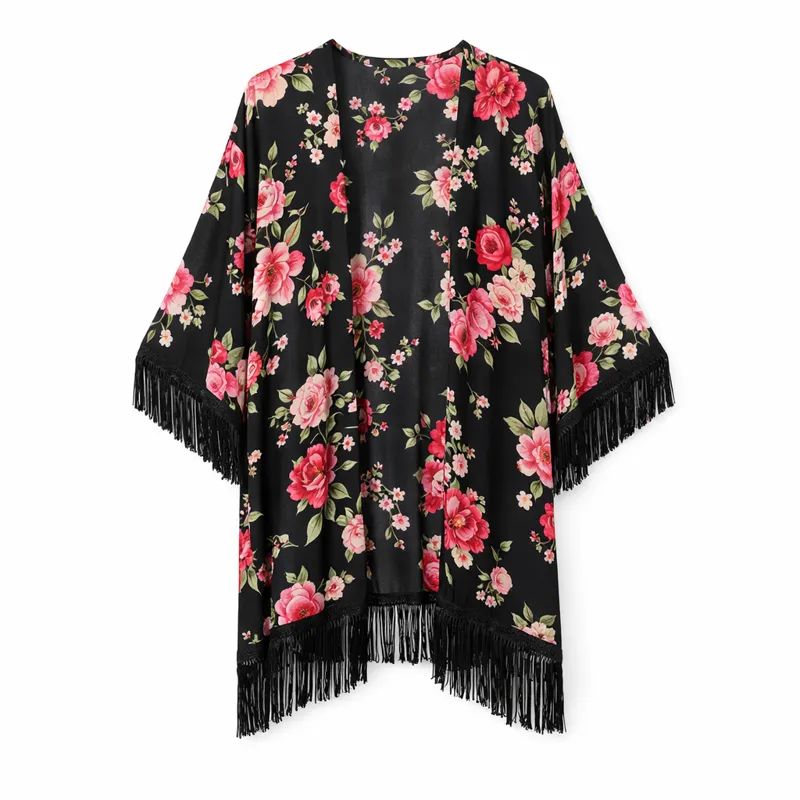
- Basic white or black t-shirt.
- Straight or mom fit jeans without rips.
- Floral kimono as a light layer.
- Strappy sandals or simple ankle boots, depending on the season.
Your Personal Style as a Filter: Create Your Own “Map”
To keep trends from dominating you, you need to clearly define what words describe your style. You don’t need to box it into a closed label (boho, classic, urban); just have 3-5 guiding adjectives.
Step 1: Choose Your Three Key Words
Think about the looks in which you felt most like yourself. What did they have in common? Maybe they were “clean, feminine, and comfortable” or “boho, relaxed, and with a sexy touch.” Write down three words and keep them always in mind.
- Elegant · simple · comfy.
- Boho · relaxed · natural.
- Minimal · urban · sophisticated.
- Romantic · modern · practical.
Step 2: Contrast Each Trend with Your Words
Every time you fall in love with a trend, ask yourself: “Does this piece reinforce or break my three words?” If it fits at least two, it will probably integrate well into your wardrobe.
Step 3: Adapt the Intensity Level
Not all trends need to enter your life at the same level. You can play with three intensities:
- Minimal touch: accessories (glasses, bag, belt, jewelry).
- Medium element: one standout piece (blouse, skirt, shoe).
- Entire look: only if it truly fits with your base style.
Always start by trying the trend as an accessory. If you find yourself using it and feeling good, level up to a piece. It’s the easiest way to avoid impulsive purchases that don’t fit.
Color, Beauty, and Accessories: Small Gestures That Change the Result
Sometimes it’s not the trend that makes you feel like you’re in a costume but how you complement it: hairstyle, makeup, sunglasses, or accessories can take a look to your ground or throw it to the extreme.
Hair: Styling That Balances the Look

A highly styled look can make a simple outfit seem too much for an event, and vice versa, a strong styling effort with too messy hair can give the impression of “I got dressed in a hurry.”
- If the outfit is already very striking (shiny, voluminous, bright colors), opt for a more relaxed hairstyle: soft waves, clean low ponytail, messy bun.
- If the look is very basic, you can elevate it a little with polished brushing, high ponytail, or a very clean low bun.
Sunglasses: Micro Trend, Maximum Effect
Sunglasses are the easiest and quickest way to add trend without feeling out of place. Change the frame, and suddenly a very simple look reads much more current.

- Thin metallic frames: perfect if your style is more elegant and minimal.
- Soft oval or “cat eye” shapes: ideal for a feminine touch without resorting to overloaded garments.
- Large fashion glasses: wear them when the rest of the look is quite clean so as not to compete.
Jackets and Layers: Your Best Ally Against Costumes

A good neutral jacket can tame almost any trend. Think of light blazers, plain denim jackets, or clean coats in cream, gray, or camel tones. They send a very clear message: style prevails, the trend follows.
Quick Checklist Before Leaving the House
To wrap up, here’s my express checklist to know if a trendy look is still “you” or if it has crossed into costume territory.
- 1. Is there only one clearly standout piece?
If there are more than two competing, try removing one. - 2. Does the main color respect your usual palette?
A different touch is fine, but it shouldn’t clash with everything else. - 3. Can you walk, sit, and live normally in that look?
If you’re worried about the clothing, something is off. - 4. Do you recognize yourself in the mirror?
Imagine someone who knows you well sees you from afar. Would they say “That’s you”? If yes, you are on the right track. - 5. Do you want to wear the look again another day?
If you see yourself using it on another occasion, you have integrated the trend into your style.
Frequently Asked Questions About Trends and Personal Style
How can I follow trends without spending too much?
Start with accessories: scarves, belts, jewelry, sunglasses, or a bag in the season’s color. Then, if you see it fits your style, elevate it to a standout piece like a blouse or a skirt.
What should I do if a trend I love doesn’t favor my body type?
Look for the essence of the trend and translate it to a cut that works for you. For example, if you love mini skirts but prefer to be more comfortable, try midi skirts in the same fabric or pattern, or pants of the same style.
How do I know if I’m dressed like a costume?
The clearest signal is discomfort: if you find yourself looking in the mirror too much, thinking about the clothes with every step, or having difficulty recognizing yourself, the look probably isn’t coherent with you. Adjust the level of trend or remove one standout piece.
Is it a good idea to build a capsule wardrobe if I really like trends?
Yes, as long as you have a base of very combinable pieces in neutral tones and use trends as “layers” that come in and out each season. The capsule wardrobe gives you stability; the trendy pieces add a touch of freshness.
How often should I revisit my personal style?
Your style evolves with your life: work, age, city, body. A good reference is to review it once a year, coinciding with a strong seasonal change (spring or autumn), updating your three keywords and adjusting what no longer represents you.