
Trends · Personal Style
Today I want to talk to you about something we’ve all felt at some point: you see a beautiful trend on social media, fall in love, try to copy it, and when you look in the mirror, you think… “I look disguised.” Fashion is in my DNA, but even so, if a piece doesn’t fit my personality, it shows immediately.
The key is not to chase every novelty but to learn how to filter, adapt, and translate trends into your own language. You want it to show that you are fashionable, yes, but mostly that you are still you.
How to Read a Trend Without Losing Your Style
Before diving into specific pieces, you need a sort of “pink filter” (very you in the new look) to analyze what works for you and what doesn’t. This way, you avoid impulsive purchases and drawers filled with clothes that don’t represent you.

1. Key Questions Before Following a Trend
- Does it fit into my real life? A runway look is not the same as your daily life filled with work, errands, and impromptu plans.
- Does it resemble something I already have and love? If you can combine it with three pieces that are already “very you”, it has a better chance of working.
- Do I feel comfortable with the volume, length, and neckline? If you hesitate in the fitting room, that doubt will grow when you’re out on the street.
- Is it in my color palette? Forcing colors that dull you is the quickest way to feel disguised.
Tip: Keep a photo album on your phone of 10–15 looks you adore. Every time you see a new trend, ask yourself: “Could I live in this album?” If the answer is no, better admire it from afar.
2. The Three Levels Trick
When I want to try something new, I categorize it into one of these three levels to avoid going overboard:
- Level 1 – Detail: I wear it in accessories (bags, shoes, belts, glasses). Ideal for very pronounced trends.
- Level 2 – Secondary Garment: blouses, skirts, light jackets. You still look like yourself, but with a current nod.
- Level 3 – Total Protagonist: jumpsuits, dresses, or very trendy coats. I only go here when I am 100% sure.
Start with Level 1 or 2, and move to 3 only when you feel that the trend “speaks your language”.
Current Trends You Can Adapt Without Feeling Disguised
Let’s break all this down into specific pieces that are currently trending, but seen through realistic eyes. Think of this part as a menu where you choose the exact level of trend that fits you.
1. Elegant Black Jumpsuits: The New “Little Black Dress”

The black jumpsuit has become the modern alternative to the party dress. It’s elegant, flatters almost all body types, and if you choose the right pattern, it doesn’t have to look “too dressed up” for you.
- If you’re more classic: choose a fluid jumpsuit, without many cuts, with a soft V-neck and straight leg.
- If you love minimalism: look for clean lines, thin straps, or short sleeves with almost no embellishments.
- If you like to take risks with details: play with an open back or one shoulder exposed, but balance with sober accessories.
The key to not feeling disguised lies in the accessories: shoes you already know (the heels you can live in) and a bag you identify with. With that, the leap to the jumpsuit feels much more natural.
2. Cream Dresses and Soft Neutral Tones
Cream and nude tones have been dominant for several seasons now, and they will continue. The good news: they are easy to adapt because they go well with almost all styles, from the most romantic to the most urban.
In the words of stylists with years in the industry, mastering neutrals is like creating a “base canvas” on which you can play with trends without losing your essence. In the end, your personality is in the details.

How to wear this trend without looking like a “minimal bride”?
- Break the sweetness with black or chocolate accessories (boots, belts, glasses).
- Play with textures: mix knit, linen, or satin instead of going all smooth.
- If total cream looks are not your style, start with a single piece (midi skirt or shirt) and combine it with jeans.
3. Cape Coats and Blanket Coats

Cape or blanket coats are visually prominent. If you come from structured classic coats, it’s normal to feel strange trying them on. The trick is in what you wear underneath.
- Simple base: straight jeans + plain sweater + neutral boots. Let the cape be the star.
- Controlled colors: keep the palette to a maximum of 2–3 tones (for example, gray, white, and black).
- Watch out for volume: if the cape is very wide, compensate with tighter pants.
4. Baggy Pants and Relaxed Silhouettes
Baggy pants and wide silhouettes have been on the radar for some time and are increasingly seen in a sophisticated light. If you’re used to skinny jeans, the switch might feel daunting, but there are ways to tame it.
- Start with fluid fabrics instead of very rigid denim, so the volume feels lighter.
- Define your waist with a fitted top or tucked-in shirt; if everything is oversized, you might feel lost in the look.
- Minimal sneakers or loafers help the outfit look relaxed yet polished.

5. Kimonos and Statement Print Pieces
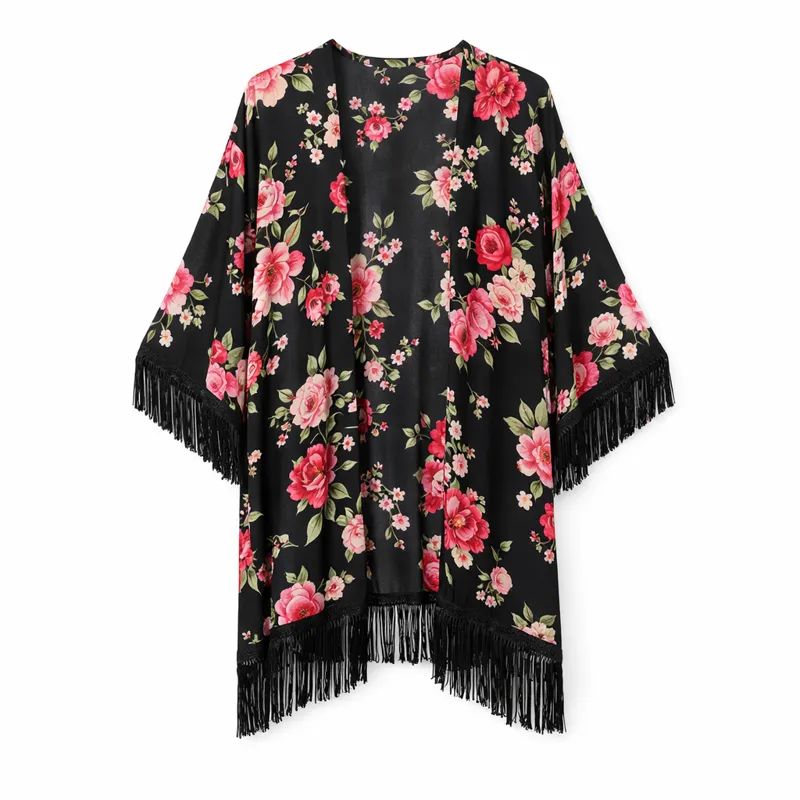
A strongly printed piece, like a floral kimono, can be your best ally to play with trends without giving up your basics. The trick is to keep everything else visually “quiet”.
- Base in white, black, or denim so the print can breathe.
- Repeat one of the colors from the kimono in shoes or a bag for coherence in the look.
- Keep makeup simple, so the garment doesn’t compete with your face.
Adapting Trends to Your Style: Step-by-Step Practical Method
Let’s organize all this into a small “style routine” so that every new trend passes through your filter and doesn’t become a disguise.
1. Define Your Base Uniform
Your uniform consists of those three or four looks you could repeat every week without getting bored. They can be as simple as:
- Straight jeans + white t-shirt + blazer.
- Simple midi dress + ankle boots.
- Fluid pants + button-down shirt + sneakers.
Write down your uniform (or even take photos of it). Every trend you want to try must fit this universe.
2. Choose a Maximum of 3 Trends per Season
You don’t need to embrace everything that’s trending. In fact, the more selective you are, the more coherent your closet will look. For each season, consider:
- A trend for statement piece (for example, elegant black jumpsuit).
- A trend for silhouette (baggy pants, cut-out dresses, etc.).
- A trend for accessories (glasses, bag, special shoes).
This way, you ensure to refresh your look without breaking with who you are.
3. Translate the Trend to Your Color Palette
If your closet is centered around neutrals and pastels, wearing a trend in fluorescent colors will make you feel very awkward. Adapt it to your tones:
- Baggy pants in beige, off-white, or gray instead of neon.
- Floral kimono in soft shades if you’re not into strong contrasts.
- Black jumpsuit that you can soften with glow makeup and light accessories.
4. Try it out at Home First (and do the Mirror Test)
Before debuting a trend at an important event, try it on a normal day. Look at yourself in a full-body mirror and ask yourself three quick questions:
- Do I recognize myself? Beyond whether I like it or not, do I still see me?
- Am I adjusting the outfit every two minutes? If you’re constantly adjusting, that piece is probably not meant for your comfort.
- Do I look just as good sitting as standing? This is crucial with jumpsuits, dresses, and wide pants.
If you pass this mini-test, that trend has a good chance of staying in your closet.
Accessory Trends: The Easy Way to Avoid Disguising Yourself
When I’m not sure if a trend is too much for me, I try it through accessories. This is the simplest way to update your look without changing who you are.
1. Sunglasses and Statement Accessories

Sunglasses, statement earrings, or unique bags can transform jeans and a t-shirt into a completely current look. If your clothes are very classic, play here.
- Glasses with thick frames to up the urban factor.
- Structured bags in pastel or soft metallic tones.
- Geometric necklaces and earrings for minimalist looks.
2. Footwear: Change the Energy of the Look
The same cream dress can feel romantic with fine sandals, boho with ankle boots, and urban with chunky sneakers. Before buying more clothes, check how you’re pairing your shoes.
- If you feel “too formal”: swap the heels for boots or white sneakers.
- If you feel very casual: try loafers or medium-heeled sandals.
- If everything feels “too basic”: a light metallic shoe can give the twist.
Hair and Makeup: Allies to Integrate Trends
Sometimes it’s not the garment that makes you feel disguised, but the clash with your usual hairstyle or makeup. A minimal adjustment here can change the entire vibe.

1. Hairstyles that Softens Very Trendy Looks
- Soft waves to ease a very structured black jumpsuit.
- Polished low ponytail when wearing wide layers or blanket coats.
- Relaxed high bun to balance very romantic or boho dresses.
If your outfit is visually striking, hair can be your “always” part that anchors you to your identity.
2. Makeup Coherent with Who You Are
You don’t need to reinvent your face to follow a trend. Think more in terms of nuances than radical changes:
- If you don’t recognize yourself with dark lips, opt for a soft lip tint instead of a matte bold lipstick.
- If you’re wearing very neutral clothes, a rosy blush and glowing skin bring life without disguising you.
- For night looks, amp up the eyeliner or eye shine, but without completely changing your signature style.
How to Create Your Own Anti-Disguise Filter When Shopping
We end with a mini practical guide for your next purchases, online or in-store. The goal: for every new piece to feel “very you”, even when it follows a marked trend.
Quick Checklist Before Checkout
- Can I combine it with at least three things I already have?
- Do I see myself wearing it in more than one context? Work, leisure, a dinner…
- Does the silhouette resemble something I already wear and like?
- Do I have to change all my makeup or hairstyle for it to work?
- Do I feel excited to wear it right away? If the answer is “well, for some occasion…”, be suspicious.
Personal Tip: When I love a trend but know it’s not 100% my style, I buy it in a low-cost version or as an accessory. If I find I really use it, then I invest in a better piece.
Frequently Asked Questions about Trends and Personal Style
How do I know if a trend fits my style?
It fits if you can incorporate it into your base uniform, combine it with at least three pieces you own, and recognize yourself in the mirror when trying it on. If it requires changing your hairstyle, makeup, and attitude, it’s probably not for you.
Is it a good idea to exactly copy a look from Instagram?
It can serve as a starting point, but it’s better to use it as inspiration rather than a literal copy. Adapt colors, volumes, and accessories to your reality and your body so that it doesn’t look like a costume designed for someone else.
What should I do if a trend I like doesn’t flatter me?
Incorporate it in small doses: accessories, small prints, or footwear. This way, you can enjoy the fashion nod without forcing a silhouette or color that doesn’t suit you.
How can I update my style without spending too much?
Choose two or three trends per season and primarily apply them to key accessories: bags, shoes, and sunglasses. Combined with your usual basics, they can completely transform your image without needing a full wardrobe overhaul.
Is it better to invest in basic pieces or very trendy items?
Your main budget should go to quality basics that you use often: jeans, neutral coats, shirts, or plain dresses. Very trendy pieces work best if you buy them in moderation and only when certain they fit with your personal style.