
Why You Follow Trends but Sometimes Feel Dressed Up
If you love fashion, you’ve surely experienced this: you see a trend online, try it on, and when you look in the mirror, you don’t recognize yourself. The look is “totally trendy,” but you feel like you’re just wearing a costume.
Therein lies the real challenge: it’s not about copying what’s in style, but filtering. The key is to only keep what fits your body, your life, and your personality.
In this guide, I want to help you do just that: understand what’s in style today, and most importantly, how to adapt it to your actual style without losing your way.

Current Trends that Work in Real Life
You don’t need to wear everything in the shop. Here are the trends that best fit a wearable style, with ideas to incorporate them into your everyday life.
1. Relaxed Silhouettes: Baggy, Wide Leg, and Controlled Oversize
Baggy pants and wide silhouettes are still very strong, but the trick is to balance volumes so you don’t lose shape or feel enormous.
How to adapt it without dressing up:
- Baggy + fitted top: if the pants are wide, balance with a tighter top or tuck it in.
- Oversized in one piece: big blazer with straight pants or slim jeans, but not everything oversized.
- Defined Waist: a belt, knot, or cropped garment that shows the waist and elongates the legs.

2. Bright Neutrals and Total Light Looks
Cream, beige, off-white, and dusty pink tones are perfect if you’re looking for effortless elegance. The “total look” in light tones is much more flattering than it seems.
- Quick Harmony: combine different shades of cream, beige, and white for a sophisticated effect.
- Textures over prints: knit, linen, soft satins… add interest without overwhelming.
- Contrast Touch: a black bag, metallic sandals, or dark glasses to break the sweetness.

3. Updated Boho: Less Costume, More Freshness
Boho returns every spring-summer, but now it’s worn cleaner and simpler, without so many necklaces and layers.
- Boho Piece Standout: a flowing dress, an off-shoulder top, or a printed kimono.
- Minimal Rest: straight jeans, simple sandals, plain raffia bag.
- Limited Accessories: a maximum of two special pieces: earrings + ring, for instance.

If you love the bohemian vibe but don’t want to look like you’re in a festival costume, stick to this idea: a boho touch in an urban look. For example, straight jeans + white t-shirt + printed kimono.
4. Well-Thought “Statement” Pieces
One standout piece can change everything. The mistake is to mix several statement pieces without allowing the look to breathe.
According to editorial experience from stylists specializing in women’s fashion, the standout piece works best when the rest of the outfit acts as a neutral background: this way, you stand out without feeling costumed and keep visual harmony.
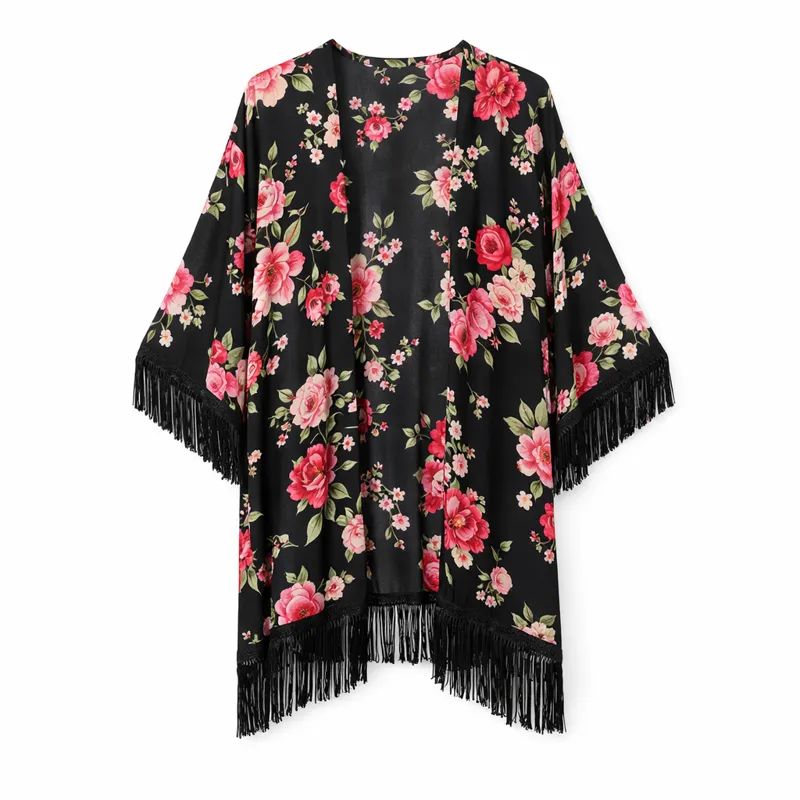
- One Star per Look: a patterned kimono, a little black dress, or a very visual poncho.
- Neutral Base: jeans, plain t-shirts, simple shoes.
- Coordinated Colors: repeat a tone of the standout piece in shoes or bag.
How to Adapt Any Trend to Your Style (Step by Step)
This is where you decide if a trend fits you or not. Think of this process as a little personal filter.
1. Define Your Base “Uniform”
Before talking about trends, be clear about what you wear 80% of the days. That’s your uniform.
- It could be jeans + t-shirt + blazer.
- Or midi dresses + white sneakers.
- Or tailored pants + flowy shirt.
Whenever a new trend arrives, ask yourself: “How does it fit into my uniform?” If you can’t easily find an answer, it’s probably not for you.
2. Adjust Proportions and Lengths
Most of the time it’s not that a trend “doesn’t look good on you,” it’s that it needs adjustments in proportion.
- Waists: if very low pants shorten you, raise them to mid or high rise.
- Lengths: raise hems, shorten sleeves, or adjust with tricks (folding, knotting).
- Layers: if a poncho overwhelms you, try it with skinny or straight pants to balance.

3. Master Your Personal Color Palette
You don’t need to do a technical colorimetry study to notice which shades light you up. Just observe:
- Colors that make people say “you look great.”
- Shades you wear over and over again without tiring.
- Colors that, when tried, make you look washed out or sallow.
When a trendy color, like a saturated pink or acid green, comes along, you can:
- Look for the softer version of that tone that fits your palette.
- Use it away from your face (pants, bags, shoes) if it doesn’t suit your complexion.
4. Adapt the Dress Code to Your Real Life
Many trends emerge from runways or editorials that have nothing to do with going to the office or the supermarket. The key is to translate:
- Party satin dress → with a knitted cardigan and flat boots for the day.
- “Black tie” black jumpsuit → with a structured blazer and fine sandals for formal events, and with an open shirt as a jacket for something more casual.
- Puff-sleeve top → with straight jeans and white sneakers, nothing more.

Think of each standout piece like a blank canvas: with metallic sandals and a clutch, it’s for a wedding; with a relaxed blazer and loafers, it’s for an informal dinner.
Accessories and Details that Update Your Look Without Making It a Costume
If you don’t want to change your entire wardrobe, focus on the details. They’re the easiest way to update without losing your essence.
1. Intentional Sunglasses
Sunglasses greatly define the personality of a look. Today both classic shapes and bolder versions in color are in style.
- Classics: aviator, tortoiseshell, black rectangles.
- Trendy: colored frames, clear lenses, geometric shapes.

2. Light Layers That Slim Down
Jackets, capes, and kimonos are your allies to add trends without giving up your usual basics.
- Printed kimono: over a white t-shirt and straight jeans.
- Minimal white jacket: with a slip dress or t-shirt + jeans.
- Cape/blanket coat: with a total light look and basics.

If you usually wear black, introduce a light outer piece to brighten and update your look without changing your dark base.
3. Hair and Makeup: The Easiest Trend to Change
Sometimes, it’s not about touching the clothes: a change in hairstyle or makeup finish can place you in the present.
- Soft, natural waves instead of tightly defined curls.
- Casual updos over ultra-tight buns.
- Glowy skin and natural brows instead of heavy contouring.

How to Build a Wardrobe that Can Withstand Trends
If you’re overwhelmed by the feeling that “everything goes out of style so quickly,” you need a solid base that doesn’t depend on the trend of the moment.
1. Capsule Wardrobe as a Neutral Base
A good capsule wardrobe isn’t boring; it’s practical. It allows you to play with few pieces and add trends only where you’d like.
- 2–3 base pants (straight jeans, tailored, one fluid).
- 3–4 plain tops in your color range.
- 1 neutral blazer, 1 special jacket.
- 2 versatile dresses (one for day, one more dressed up).
- Comfortable flats, clean sneakers, and chic sandals.
2. One Special Piece per Category
To avoid the costume effect, limit your ultra-trendy pieces. A very practical rule is:
- 1 very trendy pant (metallic, cargo, bold print).
- 1 statement jacket (cape, kimono, bright colored blazer).
- 1 standout dress (cut-outs, shine, special volume).
Everything else should be basics that always flatter you.
3. Visual Order: It’s Also Part of Style
Your surroundings influence how you dress. A well-kept wall, an organized rack, or a nice corner can help you see your garments in a different light.

Final Checklist: How to Know if a Trend Is for You
Before adding a trendy new piece to your wardrobe, put it through this quick filter:
- Do I see it with at least three pieces I already own? If not, it will just hang.
- Does it fit with my everyday “uniform”?
- Does it respect my proportions and color palette?
- Do I feel like myself when I try it on? Look at yourself in the mirror in motion, not just straight on.
- Would I wear it for more than one season? Think about whether it represents you beyond just being trendy.
If at least four answers are “yes,” the trend can likely be part of your style without making you look costumed.
Frequently Asked Questions About Trends and Personal Style
How can I follow trends if I have a very basic style?
Start with easy-to-add details: a colorful bag, trendy sunglasses, or a special jacket over your usual uniform. This way, you update your image without sacrificing comfort or feeling dressed up.
What if a trend I love doesn’t flatter me?
Look for the adapted version: change the length, neckline, volume, or color. If it still doesn’t work, limit it to accessories or makeup. And remember: it’s fine to admire a trend without wearing it.
How many trendy pieces should I have in my wardrobe?
As a general guideline, having one or two special pieces per category (pants, jacket, dress) is enough. The rest can be versatile basics that work well together and aren’t dependent on current fashions.
How do I avoid looking too dressed up in my daily life?
Always balance a very dressy piece with something more casual. A satin dress with clean sneakers, an elegant jumpsuit with a denim jacket, or a shiny top with straight jeans soften the ensemble and make it more wearable.
Is it a good idea to completely change style every season?
It’s usually not practical or sustainable. The smartest approach is to maintain a recognizable base style and experiment with trends in small doses: colors, accessories, textures, or specific patterns you want to try.