
Trends Yes, Disguise No: The Basic Rule
Fashion is in my DNA, but I also know how strange it feels to look in the mirror and think: “I’m trendy… but it’s not me.” That feeling of being disguised is the big mistake of many viral trends.
My goal with this guide is to help you read what’s in vogue now and translate it into your personal language so that your looks remain yours: coherent, flattering, and easy to wear in your daily life.
The Quick Key
A trend works when:
- it respects your silhouette and lifestyle,
- it fits your usual color palette,
- and you could repeat the look the following week without hesitation.
Quick Map of Current Trends (and How to Land Them in Real Life)
Before diving into details, I place some of the trends I’m seeing most frequently on runways, street style, and social media, and how to incorporate them without losing your essence.
Cream and Soft Neutral Colors
Polished Boho (Not Festival)
Opt for Elegant Jumpsuits
Kimonos and Light Capes
Statement Jewelry Accessories
1. Wide and Relaxed Silhouettes
Baggy pants and oversized garments are still here, but there’s no need to lose your figure or feel like you’re “in a sack.” The idea is to play with volumes consciously.
- Simple Rule: if the bottom is wide, balance it with a cleaner or slightly fitted top, and vice versa.
- If you’re a minimalist: choose wide pants in neutral tones and pair them with simple tops, almost without patterns.
- If you’re more boho: opt for fluid fabrics (viscose, mixed linen) and add some detailing like embroidery or lace.

Wide pants work if the rest of the look stays simple and true to you.

Cream tones are trendy and also soften any look without overwhelming it.
2. Cream and Soft Neutral Colors
Total looks in cream, beige, pearl gray, and off-white are in style. They work because they illuminate, are elegant, and match almost everything.
- If you usually wear black: start by introducing a cream garment (pants or sweater) and keep the rest dark. It’s a smooth transition.
- If you love color: use cream as a “canvas” and add bags or shoes in your favorite tones.
- If you fear it will dull you: look for warm-toned creams (vanilla, champagne) and bring them close to your face with gold earrings or a slightly bold lipstick.
3. Polished Boho: From Festival to Everyday
The boho style has matured: there are still ruffles, off-shoulder designs, and fluid garments, but with fewer excess accessories and slightly calmer colors.
- “Adult” Boho: choose a single standout piece (an off-shoulder top or a wide skirt) and keep the rest of the look nearly minimal.
- Key Textures: soft cotton, delicate crochet, and subtle lace… avoid mixing too many fabrics at once.
- Shoes: simple sandals, refined cowboy boots, or wedge espadrilles, depending on the time of day.

Think of boho as a touch, not as a complete festival disguise.
How to Adapt a Trend to Your Style Without Feeling Disguised
When something goes viral, it’s easy to fall into the “I wear it because I have to” trap. To avoid that trap, I always like to work with this small method.
Steps to Adapt Any Trend
- Identify the heart of the trend. Is it the color? The silhouette? The type of fabric? Keep just one key idea.
- Compare it with your mental uniform. Think about your most repeated look during the week. Where would this idea fit?
- Start at Level 1. A very soft version: one detail, one accessory, or a small garment.
- Observe how you feel. If on the third day you still want to repeat, raise the intensity a notch.
- Discard without guilt. If you don’t see yourself, it’s not “your” trend. There’s nothing to prove.
Your Style DNA: The Filter That Changes Everything
For this method to work, you need to have a fairly clear idea of your style foundation. You don’t have to label yourself too much, but it’s helpful to know your preferences.
- If you’re very classic: prioritize clean cuts, subtle patterns, and soft versions of any trend (less volume, less contrast).
- If you’re creative: play with unexpected color combinations and special details, but limit the number of “strong trends” per look.
- If you’re practical: focus on versatile garments (blazers, straight jeans, shirt dresses) and update them with accessories or a single trendy detail.
Real Examples: How I Adapt Three Strong Trends
I’ll show you how I like to translate some currently very present trends so they don’t seem like a disguise but rather a natural extension of your wardrobe.
1. The Elegant Black Jumpsuit
Clean-cut black jumpsuits have become a real alternative to the classic party dress. I love them because they flatter, have a lot of attitude, and are surprisingly versatile.
How to Avoid Looking Disguised:
- Choose a neckline and leg length similar to those you usually wear in your favorite dresses.
- If you don’t usually wear very fitted clothing, seek out fabrics with drape and marked waists with a belt, not with a tight pattern.
- Keep accessories very much in your line: if you’re discreet, small earrings and fine sandals; if you’re maximalist, a statement bag and bold lips.

A black jumpsuit can be as much yours as your LBD if you respect your proportions and how you wear accessories.
2. The Cape-Coat and Outer Volumes

Cape coats are trending, but well combined, they feel just as practical as your usual straight coat.
Cape coats and maxi enveloping coats are very much present. The risk: that the coat takes all the attention and you get “lost” inside.
- Proportion Trick: keep the bottom in light tones and straight lines (straight or slim pants) to counterbalance the volume on top.
- If you’re petite: prioritize capes that reach mid-thigh or just above the knee, and pair them with slightly elevated footwear.
- If voluminous garments overwhelm you: use the cape only for specific moments (stroll, dinner) and take it off indoors, where you stick to your basics.
3. Kimonos and Statement Printed Garments
Kimonos, fluid jackets, and statement printed garments are a perfect resource to add trend without overhauling your whole wardrobe.
The Key: treat them as a collector’s piece and build the rest of the look around them.
- Very simple base: plain T-shirt + straight jeans or neutral sheath dress.
- Repeat a color from the print in shoes or a bag for coherence.
- Limit jewelry to one or two elements so the kimono can breathe.
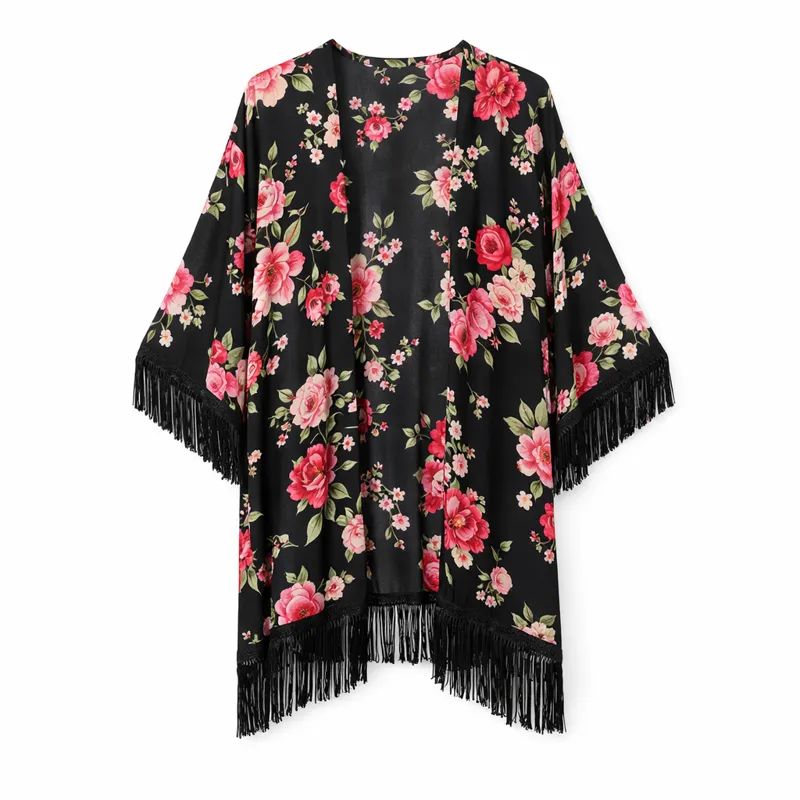
If the kimono speaks loudly, the rest of the look whispers. This way you won’t feel disguised.
Building a Flexible Capsule Wardrobe: Your Safety Net
The best way to play with trends without losing yourself is to have a clear base: a small capsule wardrobe that works even on days without inspiration.
What Pieces Never Fail
- A pair of jeans that truly fit you well (not the one that “is trendy”).
- A simple cream or black dress that you can elevate with accessories.
- A minimal lightweight jacket that goes with everything.
- Plain t-shirts or tops in your favorite neutrals.
- A pair of comfortable shoes that also flatter you.

Think of your capsule wardrobe as the stable foundation on which you can add trends in small doses.

A clean white or cream jacket can elevate almost any look and bring it closer to current style.
How to Add Trend to This Core
- A special belt to update plain dresses.
- A colored bag to add a trendy touch to your basics.
- A pair of current-shaped sunglasses in colors you already wear.
- A statement piece per season (kimono, colorful blazer, black jumpsuit…).
Accessories That Update (Without Stealing Your Identity)
Sometimes it’s smarter to update just the accessories rather than jump into very marked garments. Less investment, less risk, and more playfulness.
Sunglasses, Your Immediate Filter
Sunglasses have shifted from a practical detail to completely marking the intention of your look.
- Trendy Shapes: small oval, 90s rectangular, and oversized wraparound sunglasses.
- If you’re discreet: keep the classic colors (black, tortoise shell) but update the shape.
- If you like to take risks: play with colored frames or slightly tinted lenses.

Changing just the sunglasses can make a basic look seem completely current.
Jewelry and Small Style Gestures
You don’t need to fill your jewelry box: simply have two or three gestures that you repeat and that become your “signature”.
- A type of earring that you almost always wear (fine hoop, mini hoop with charm, golden button…).
- Some special ring that you mix with simpler pieces.
- A watch, bracelet, or choker that you use to amp up night looks.
Quick Tip: when you’re unsure if an accessory suits you, try it with your simplest outfit (jeans + t-shirt). If you still feel disguised, it’s probably not for you.
Common Mistakes That Make a Trend Look Like a Disguise
There are patterns that repeat over and over again. If you identify them, it’s easier to dodge them.
1. Mixing Too Many Trends in One Look
Cargo pants, corset top, biker boots, futuristic sunglasses… all at once. It’s normal that you end up feeling like a music video character and not yourself.
- Practical Rule: maximum one strong trend and one secondary trend per look. The rest should be basics.
2. Ignoring Your Real Lifestyle
Some impossible heels for work when you know you’ll be on your feet, an ultra-delicate dress for a plan with kids or a pet… no matter how beautiful it is, if it can’t keep up with your pace, you’ll feel forced.
3. Copying an Instagram Outfit Literally
Finding inspiration is fine, but replicating isn’t. Your body, height, context, and even your climate are not the same. Adjust the length, fabrics, and level of formality to fit your daily life.
4. Abruptly Abandoning What Has Always Worked for You
If you’ve defended a certain type of pants, a specific skirt length, or a color that brightens you for years, don’t let it go just because something else is trending now. You can update details, but don’t throw your identity overboard.
Final Checklist: How to Know if a Trend is Right for You
Before you checkout or fill your online cart, review this small questionnaire. It will save you from returns and hanging garments with tags.
- Can you see yourself wearing this garment in a year if it stops being trendy?
- Can you pair it with at least three things you already have in your wardrobe?
- Does it respect your strong points (legs, waist, neckline, shoulders… whatever you like most about yourself)?
- Does it fit two or more real contexts in your life (work, leisure, travel, dinners…)?
- Do you feel like yourself when trying it on, even without makeup or styled hair?
If you answer “yes” to most, that trend will likely integrate well into your style. If you hesitate on almost everything, you may only need a softer version… or simply to move on.
See Frequently Asked Questions
Get Inspired from Your Wardrobe First
Frequently Asked Questions about Trends and Your Own Style
How do I know if a trend flatters my body type?
Observe which parts of your body you want to highlight and which ones you prefer to soften. If the trend enhances just what you like (waist, legs, shoulders…), that’s a good sign. If it emphasizes areas you don’t want or visually makes you “wider,” it’s better to look for another version.
Is it a good idea to invest a lot of money in a passing trend?
In general, no. Reserve higher investments for timeless pieces or for trends you already know represent you and you’ve worn recurrently. To try something new, start with more affordable versions or accessories.
Can I mix styles (boho, elegant, sporty) without looking like a collage?
Yes, but choose a dominant style and keep the others just as details. For example, an elegant look with clean sneakers and a slightly boho bag. If all elements compete for attention, the outfit becomes chaotic.
What should I do with garments I bought for fashion but now don’t feel are mine?
First, try to tone them down: pair them with basics, change their accessories, or adjust their length. If they still don’t represent you, let them go by selling, exchanging, or donating them. It’s better to free up space than to keep “guilt” hanging around.
How do I keep my style updated without following all trends?
Choose each season one or two micro-trends that fit your foundation (a new color, a type of shoe, a cut of pants) and let the rest pass. Your wardrobe will be coherent, updated, and much more wearable.